Built for private practice, not accounting firms.
Otis reads the spreadsheet you already use to track sessions and submits it to HMRC. No new system to learn between clients.
Do psychotherapists and counsellors need MTD software?
Yes, if your income from private practice is above the threshold. But "software" doesn't mean accounting software, and it doesn't mean giving up the spreadsheet you use to track sessions, fees, and client billing.
From April 2026, instead of one Self Assessment return a year, you'll send HMRC four smaller updates. That's the whole change. Your records stay exactly as they are.
There are two ways to meet this requirement. Move everything into practice management or accounting software, or keep your spreadsheet and add bridging software, which connects it to HMRC. Neither is wrong. Otis is built for the second option, because most therapists in private practice already have a system that works and don't want to relearn one mid-caseload.
Got a letter from HMRC?
A letter about MTD isn't a warning. It means your last tax return put your qualifying income above the threshold, and HMRC is giving you time to get ready before April 2026.
What You Should Do:
- Don't ignore the letter, HMRC won't automatically register you
- Check your qualifying income, including any EAP or insurance referral income
- Start researching MTD-compatible software options like Otis
- Consider signing up early to avoid the last-minute rush
- Speak to your accountant or bookkeeper if you have one
Who This Actually Affects
You're in scope once your total qualifying income from private practice and/or property crosses these thresholds:
From 6 April 2026
You're affected if your qualifying income is over £50,000.
From 6 April 2027
You're affected if your qualifying income is over £30,000.
From 6 April 2028
You're affected if your qualifying income is over £20,000.
Important Notes:
- • Qualifying income means gross income (before expenses), not profit
- • Add up private clients, EAP referrals, and insurance-funded work together
- • HMRC will check your previous tax returns to determine if you're in scope
- • Below £20,000? You can still voluntarily sign up for MTD if you wish
What Actually Changes Under Making Tax Digital
Stays the same: your session log, your fee tracking, your spreadsheet. Otis doesn't touch any of it.
Changes: how that information reaches HMRC. Instead of one submission a year, you send four smaller updates. Otis reads your spreadsheet and sends the figures straight to HMRC.
MTD doesn't force you to adopt practice management software you don't need. That's why Otis works alongside the way you already track your practice.
Two Things Private Practitioners Often Miss
Clinical supervision is a condition of membership for BACP, UKCP, and BPS accreditation, and HMRC treats it as a genuine business expense. If you pay for individual and group supervision and aren't claiming it, that's taxable profit you don't need to be paying tax on.
EAP and insurance referral income can also land awkwardly. Most sole traders report income on a cash basis, when the money arrives, not when the session happened. An EAP payment for January sessions might land in March, which puts it in a different quarterly update to the one covering the work itself. That's normal, and Otis handles it the same way your spreadsheet already does, by recording income when it actually arrives.
Why Otis Exists
We kept hearing the same thing from therapists in private practice: my spreadsheet already works. They didn't need a practice management system. They needed a bridge to HMRC. So that's what we built.
Otis doesn't ask you to change how you log sessions or track fees. It reads your spreadsheet, checks the categorisation, and submits it to HMRC. Four times a year, a few minutes each time.
Download our free spreadsheet template, or read our software guide to see how it works.
Common Questions
Can psychotherapists still use spreadsheets for MTD?
Yes. A spreadsheet isn't recognised by HMRC on its own, but paired with bridging software like Otis, it meets the requirement in full.
Can consultants and other self-employed professionals use the same approach?
Yes. This applies to any sole trader who tracks income and expenses in a spreadsheet, whether you're a consultant, coach, or private practitioner.
Do I need practice management or accounting software?
No. That's one valid route, but not the only one. Bridging software is a recognised alternative if you'd rather keep your existing spreadsheet.
Is bridging software recognised by HMRC?
Yes. It's listed in HMRC's own guidance as a valid way to meet MTD requirements, and it appears on HMRC's official software finder tool.
What if I have both private practice and rental income?
You combine both when checking against the thresholds above. Otis handles submissions for both income types.
Finding Otis Through the HMRC Software Finder
HMRC provides a software finder tool to help self-employed individuals find solutions that meet MTD requirements. While we'd love for you to choose Otis, here's how to navigate the tool and explore your options. Tap a step to expand it.
This filters the tool to show software designed for individual tax reporting rather than corporate solutions.
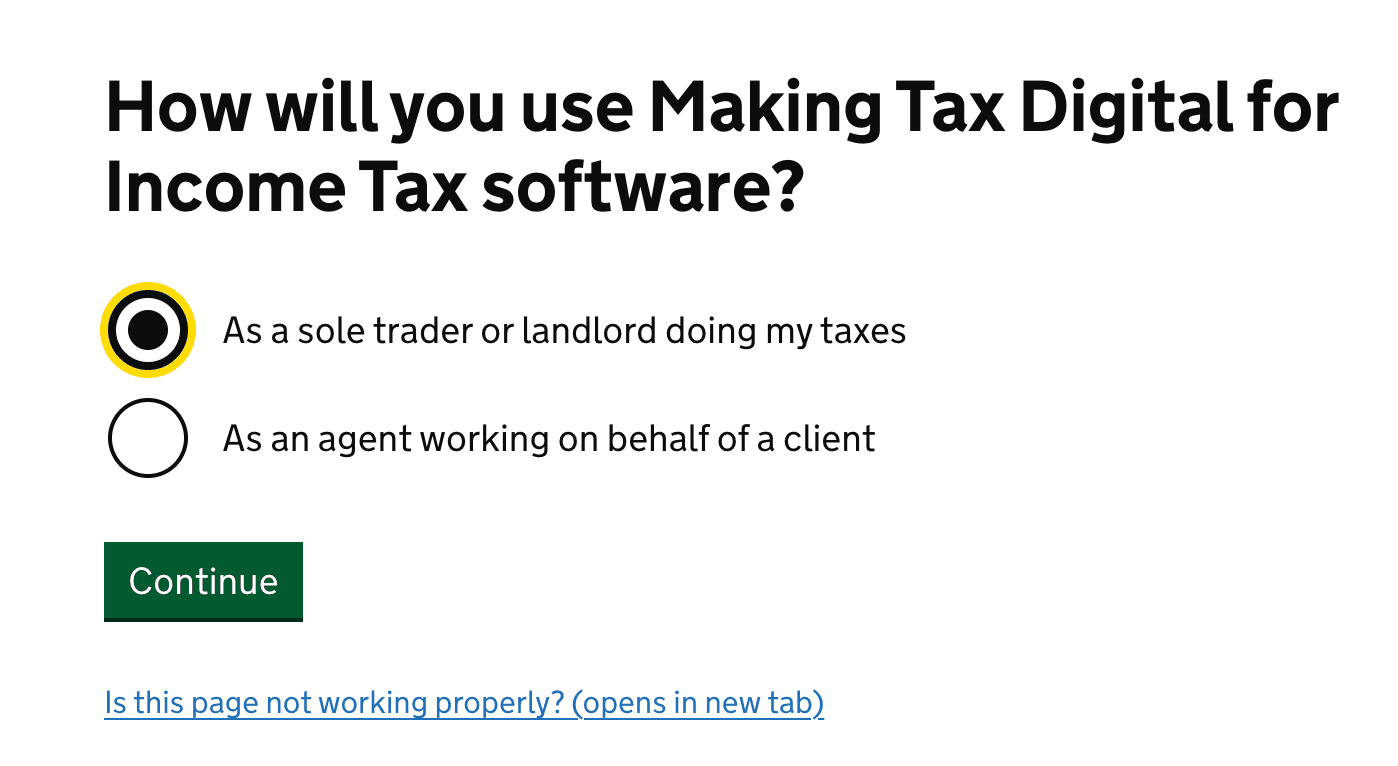
This narrows results to software designed for sole traders and self-employed individuals. If you also have rental income, you can select both options.

Select whether you follow the standard tax year (6 April to 5 April) or use a custom accounting period. Otis works with both options.
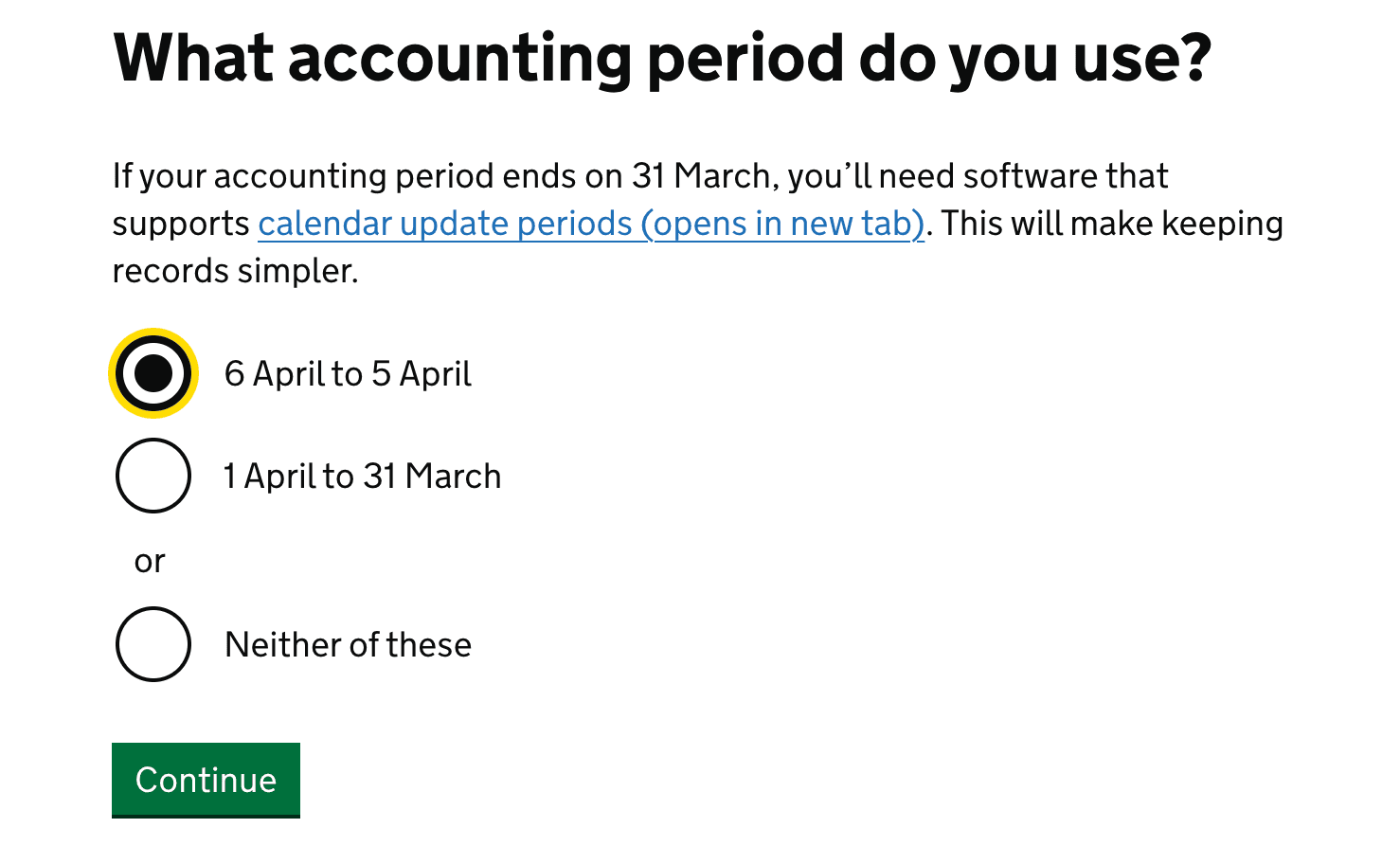
Consider whether you need to also report any dividends, interest, or pension contributions to HMRC.

Look for bridging software like Otis that connects your existing records to HMRC without requiring you to learn complex accounting software.
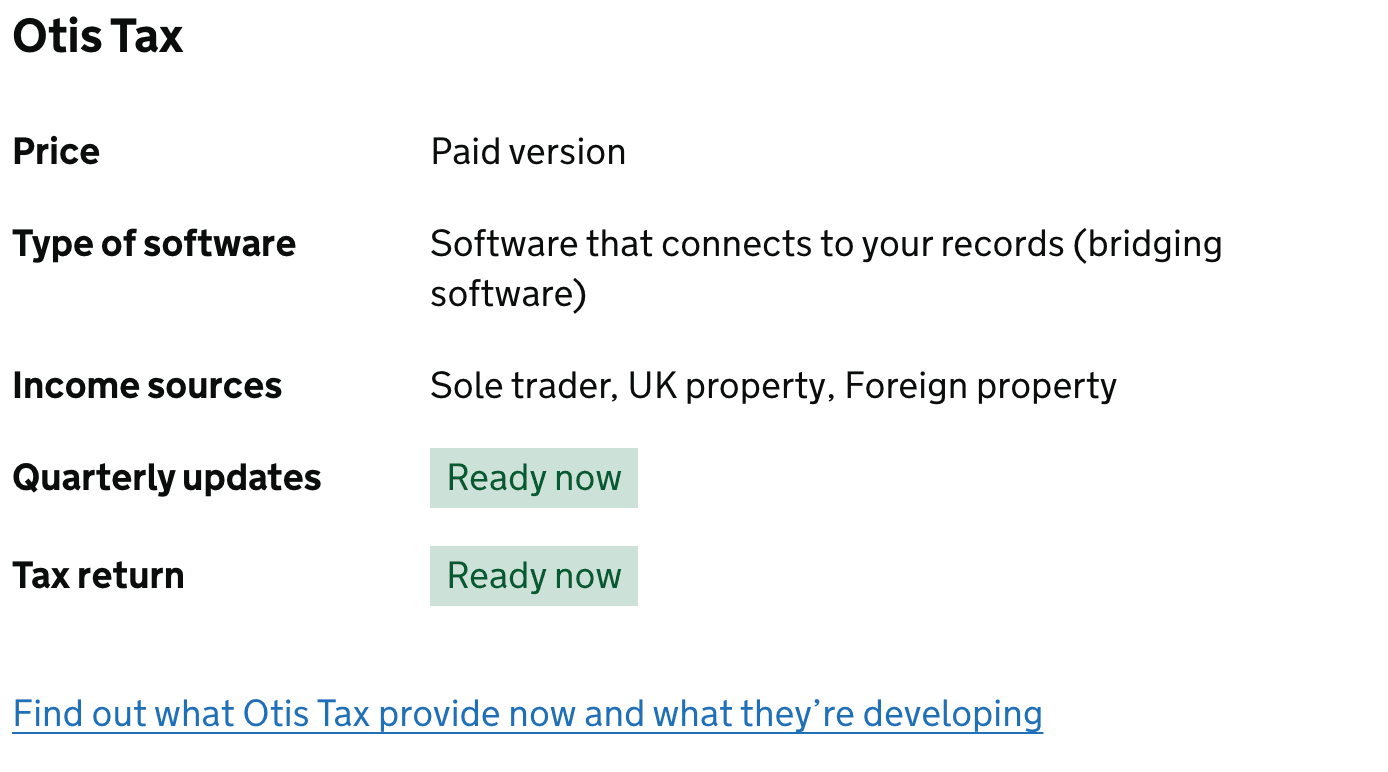
Ready to Get Started?
If you want to get ahead of the April 2026 deadline, get early access to Otis today.